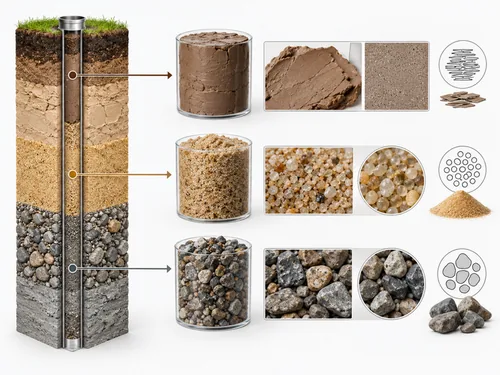
Soil Identification
Correct soil identification links every laboratory sample to its actual geological layer, depth and field conditions.
Laboratory determination of physical and mechanical properties of soils and rocks to support engineering-geological interpretation and design parameters.
Laboratory testing is a key stage of engineering geological investigations. Its purpose is to determine the actual physical, strength and deformation properties of soils and rocks that form the basis for engineering design decisions. Reliable results depend on proper sampling and preservation, appropriate test methods and the quality of testing. A formal test report has little engineering value if the reported parameters do not reflect actual ground properties.
The laboratory programme is defined according to the material encountered, sample quality and the requirements of the project.
Correct soil identification links every laboratory sample to its actual geological layer, depth and field conditions.
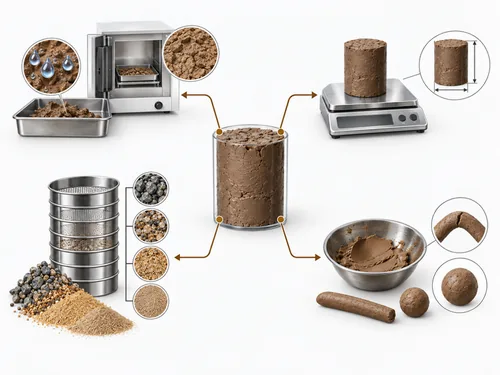
Physical properties define the natural state and classification of the soil and form the basis for further engineering evaluation.
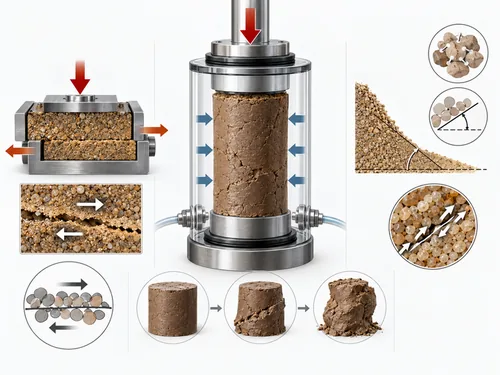
Strength testing determines the soil parameters that govern its resistance to shear and failure under loading.
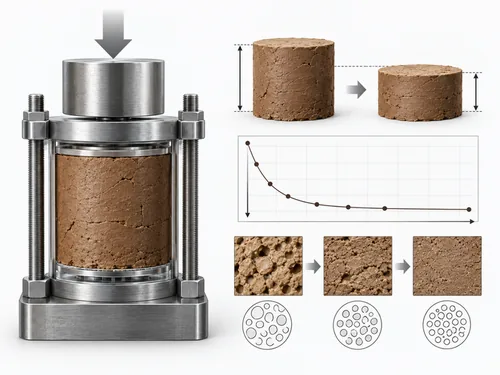
Deformation testing evaluates how the ground compresses and settles under the loads transmitted by the structure.
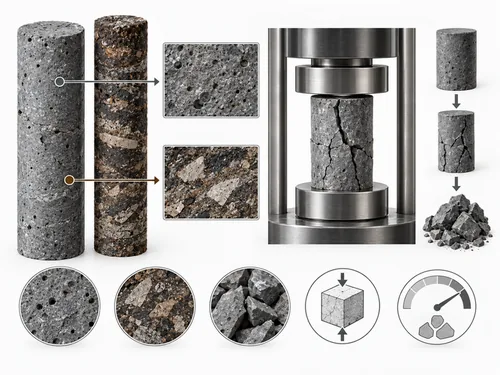
Rock testing provides quantitative data on the strength and physical properties of intact rock material.
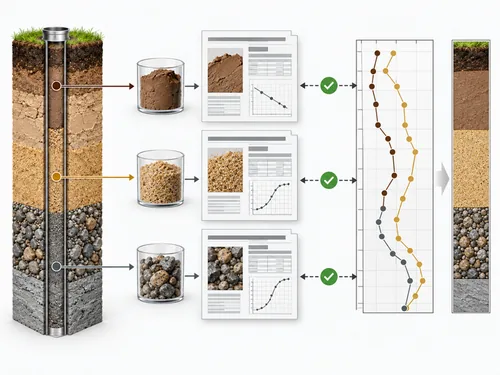
Laboratory results gain engineering value only after they are checked against field observations and the geological model of the site.
A clear workflow connects the tested sample with its geological origin, laboratory results, engineering parameters and final reporting.

Each laboratory result must remain directly linked to the sample location, sampling depth and corresponding geological layer. Correct identification ensures that measured properties are assigned to the actual engineering-geological unit they represent.
Laboratory measurements are systematically reviewed and organized into clear result tables and graphical relationships. Individual values are checked for consistency, allowing the overall behaviour of each soil or rock unit to be evaluated rather than relying on isolated test results.
Laboratory results are interpreted together with field observations and geological conditions to establish representative engineering parameters. These values form the basis for assessing strength, deformation and other ground characteristics required for design calculations.
The interpreted laboratory data are incorporated into the geological model, engineering-geological sections, property tables and final conclusions of the investigation. This ensures that laboratory information becomes an integral part of the complete ground assessment provided to the designer.
Laboratory results are not treated as isolated numbers. They are checked against sampling depth, field descriptions, borehole logs and the geological structure of the site, then converted into representative engineering parameters and integrated into the final engineering geological report.