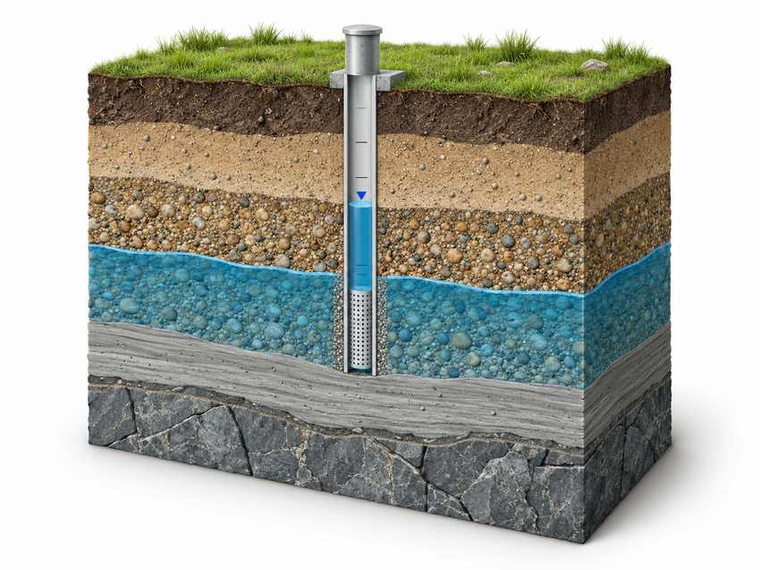
Groundwater Conditions
Groundwater conditions define the presence, depth and occurrence of groundwater within the investigated ground profile.
Focused assessment of groundwater occurrence, water levels and permeability conditions that may affect foundations, excavations, drainage and construction.
Assessment covers groundwater occurrence, filtration conditions, construction interaction and related engineering-geological processes.
Groundwater conditions define the presence, depth and occurrence of groundwater within the investigated ground profile.
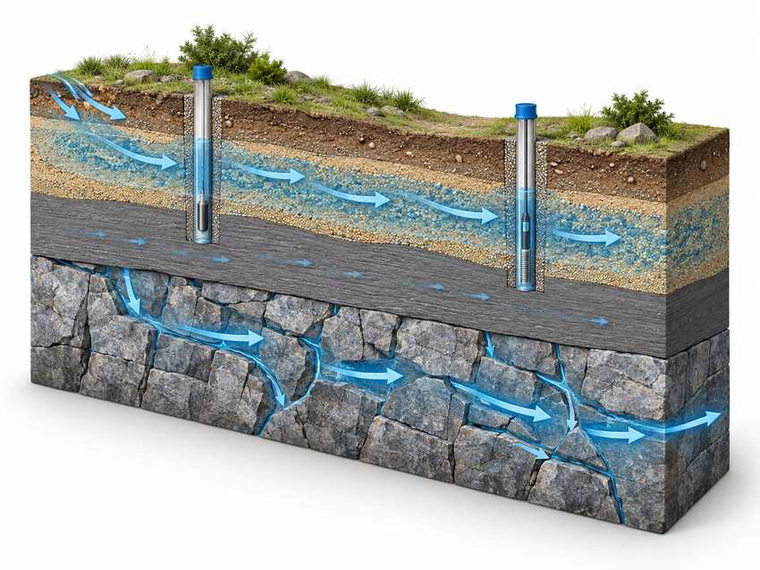
Permeability and groundwater flow determine how easily and in what direction water can move through soils and fractured rock.
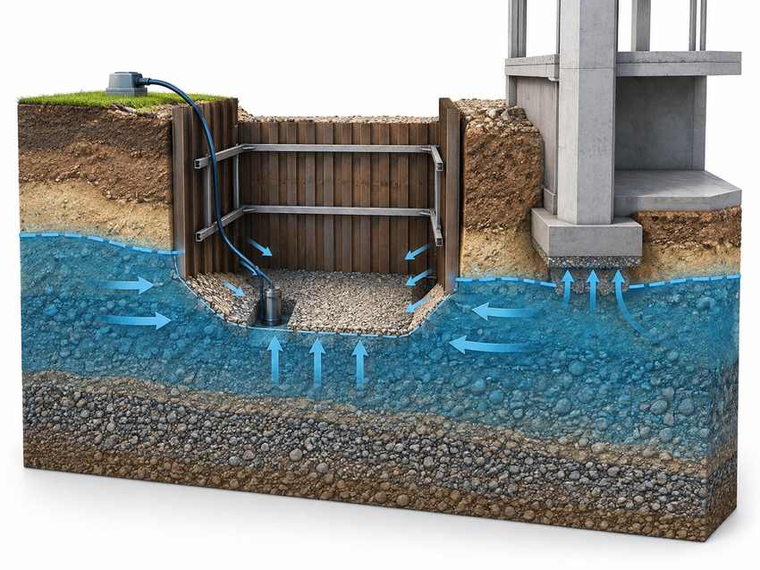
Groundwater can directly influence excavation conditions, foundation performance and the construction of underground structures.
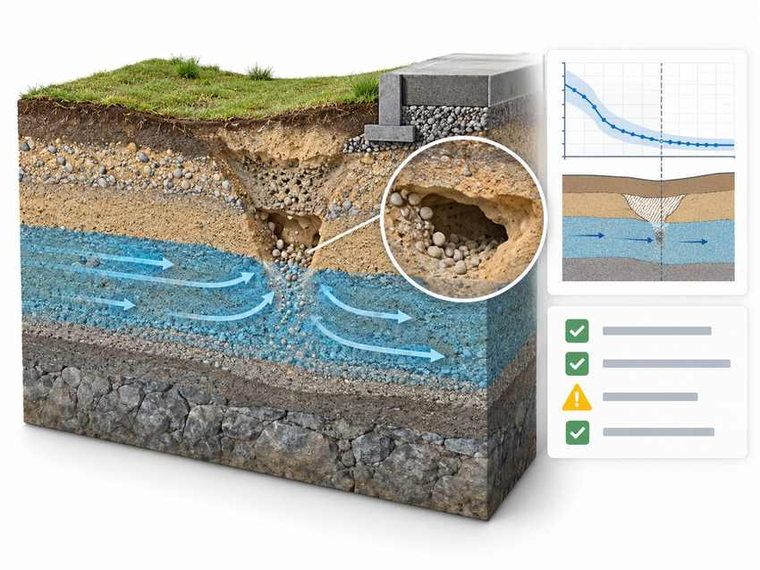
Groundwater conditions are evaluated together with the geological setting to identify their influence on adverse engineering-geological processes.
Hydrogeological assessment is not limited to identifying the presence or level of groundwater. It evaluates groundwater conditions, filtration characteristics and their engineering significance for excavation, foundation design and the long-term performance of structures. Groundwater conditions are also closely related to the engineering-geological setting of a site, since groundwater presence and flow may contribute to suffosion, internal erosion, soil washout and local weakening of the ground.
Such assessment becomes particularly important in areas with shallow groundwater or artesian conditions. In Armenia, this is especially relevant to parts of the Ararat Valley, where groundwater may occur at relatively shallow depths and where continued development of urban and populated areas increases the importance of correctly evaluating groundwater conditions at the design stage.

From groundwater conditions to engineering decisions. The final sequence summarizes how hydrogeological information is translated into practical engineering understanding: recognition of groundwater conditions, assessment of excavation and foundation interaction, selection of drainage or dewatering measures, evaluation of possible geological processes, and integration of the results into the final engineering recommendations.