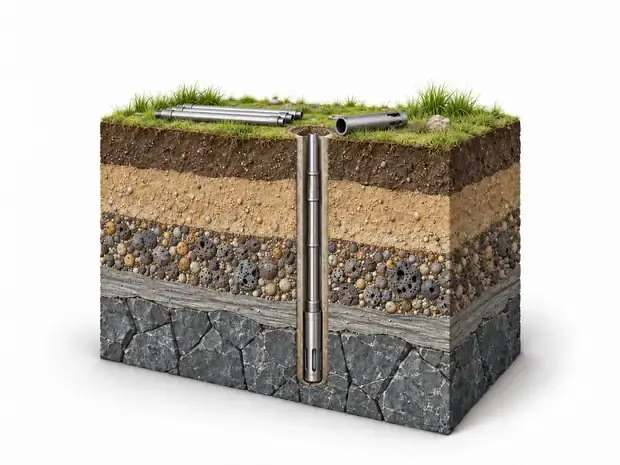
Borehole Drilling
Engineering boreholes provide direct access to subsurface conditions and form the basis for reliable geological investigation.
Geotechnical drilling and sampling focused on obtaining reliable information about subsurface conditions for engineering interpretation and design.
Drilling is the primary means of directly investigating subsurface conditions. Properly executed boreholes provide the geological information, representative samples and field observations required to define the ground profile and support reliable engineering interpretation.
Engineering boreholes provide direct access to subsurface conditions and form the basis for reliable geological investigation.
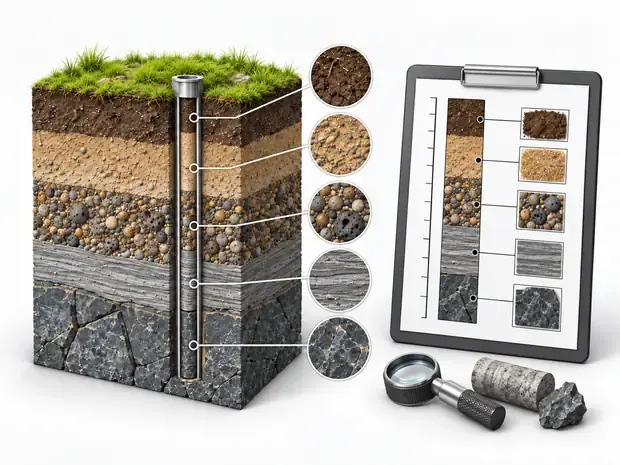
Detailed geological logging records the sequence, condition and characteristics of soils and rocks encountered in each borehole.
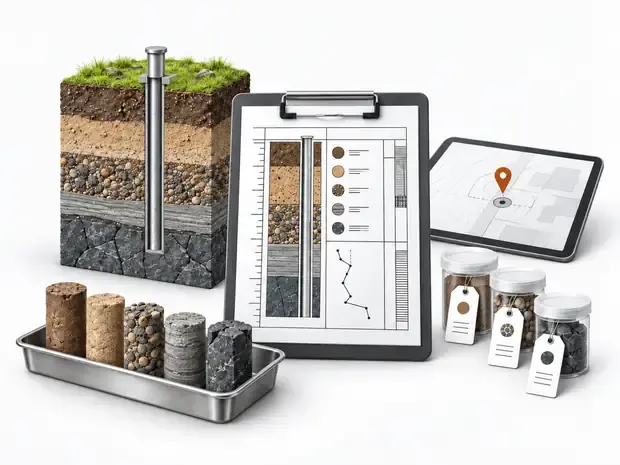
Representative soil samples are obtained from selected depths for laboratory identification and determination of physical and mechanical properties.
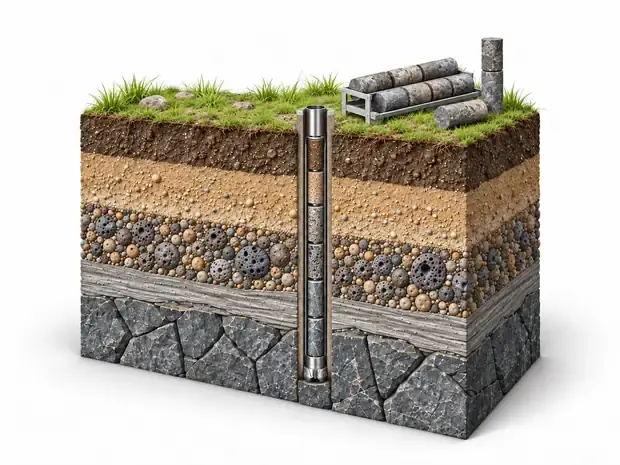
Rock coring provides continuous core samples for direct assessment of lithology, structure and rock mass condition.
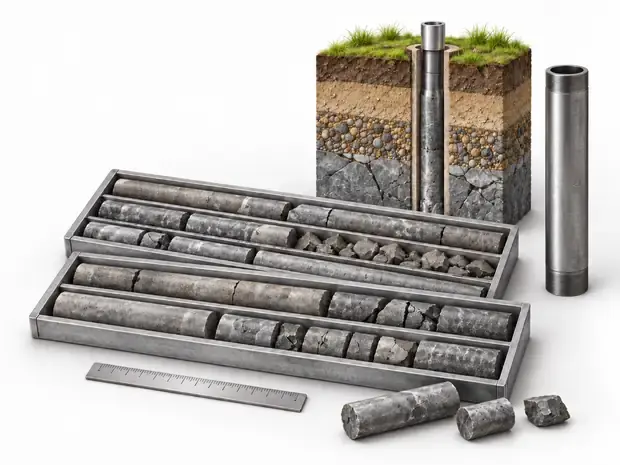
Core recovery and RQD provide quantitative indicators of core quality, fracturing and overall rock mass condition.
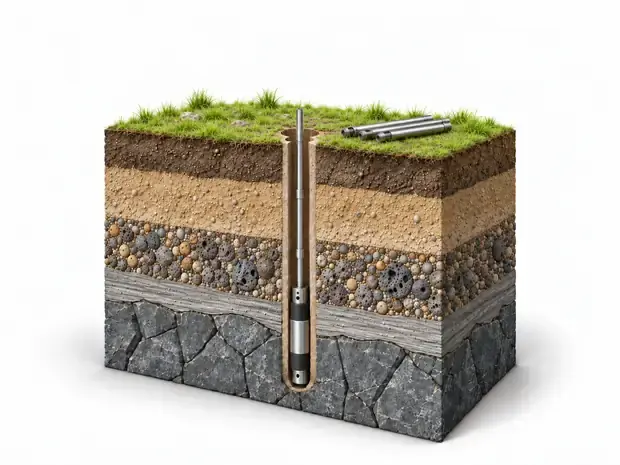
In-situ tests provide direct measurements of ground behaviour under natural field conditions.
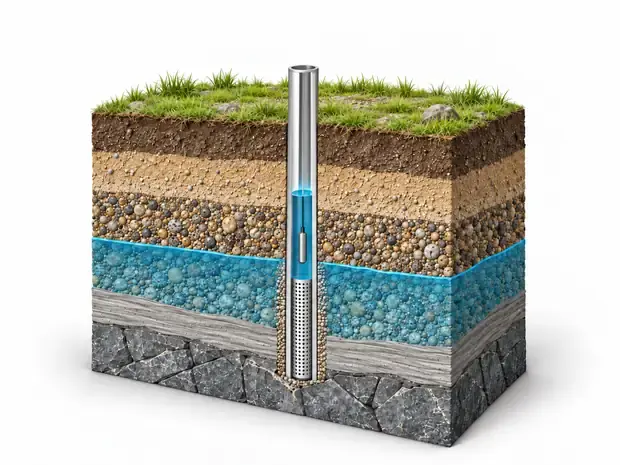
Groundwater encountered during drilling is recorded to establish its depth, occurrence and possible influence on site conditions.
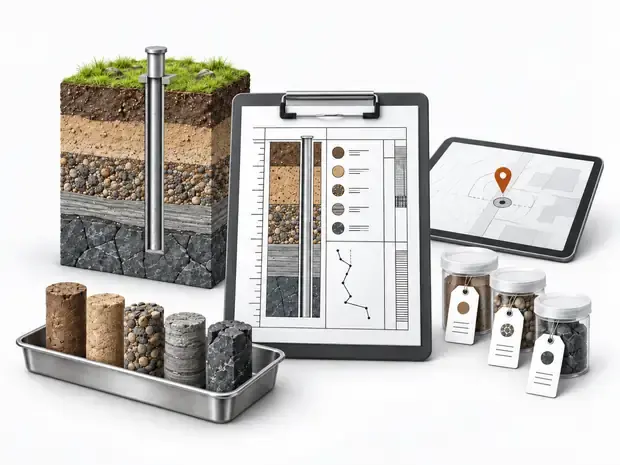
Every borehole is systematically documented to create a clear and traceable record of the subsurface investigation.
Reliable engineering conclusions begin with properly executed drilling. Accurate boreholes, representative sampling, careful geological logging and field observations ensure that the subsurface model reflects actual ground conditions and provides a sound basis for engineering interpretation and design.